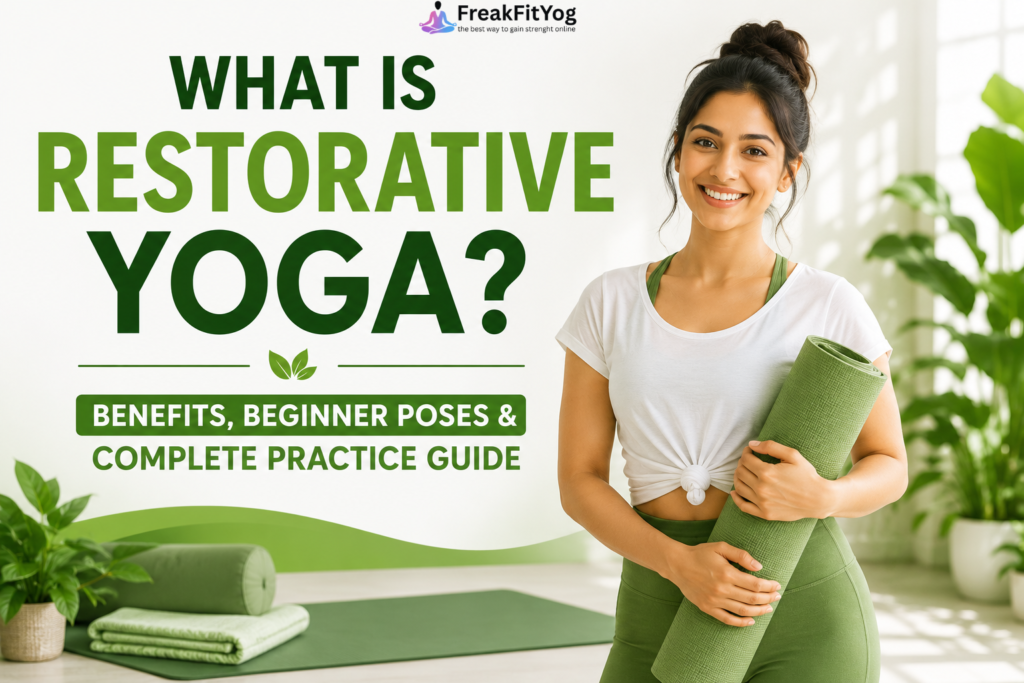
What Is Restorative Yoga? Benefits, Beginner Poses & Complete Practice Guide
If climbing stairs makes you wince, kneeling feels like a small negotiation, and every "just go for a run" suggestion makes you want to scream — this guide on Restorative Yoga is for you.
7 min read · Beginner Friendly1. The Problem: When Your Knees Say No
There's a particular kind of frustration that comes with knee pain. It's not dramatic. It's not the kind of injury that gets you sympathy at a dinner party. It's just... there. Every single day. A dull ache when you sit cross-legged. A sharp twinge going down the stairs. That moment of hesitation before you get up from the floor, bracing yourself like you're about to do something heroic just to stand up.
Maybe you used to run. Maybe you used to love a good HIIT class. And somewhere along the way, your knees started sending you messages you couldn't ignore anymore — messages your doctor, your physiotherapist, or your own common sense told you to listen to. So you stopped. And then the guilt crept in, because "staying fit" started to feel like something happening to other people, not you.
Why This Feeling Is So Common
You're far from alone. Millions of people quietly give up on movement every year because their knees can't keep up with high-impact routines. Here's the part nobody tells you: you don't have to choose between protecting your knees and staying active. This is exactly why so many people are turning to Restorative Yoga — not as a consolation prize for the workouts they can't do anymore, but as a genuinely effective, science-backed way to reduce pain, rebuild strength around the joint, and move without fear again.
02The Solution: Move Differently, Not Less
This is where FreakfitYog comes in
At FreakfitYog, we built our restorative and therapeutic yoga programs specifically for people who've been told to "take it easy" but don't actually want to sit on the sidelines. Our instructors specialise in Restorative Yoga, joint-friendly sequencing, and slow, supported movement that meets your body exactly where it is today — not where it was five years ago.
Whether you're recovering from an injury, managing arthritis, dealing with post-surgery stiffness, or simply noticing your knees aren't as forgiving as they used to be, our small-group and one-on-one sessions at freakfityog.com are designed around real bodies with real limitations. No forcing. No comparison. Just consistent, careful progress.
What Makes FreakfitYog Different
Unlike generic online videos, every session is guided live, adjusted to your comfort level, and built around your specific pain points — literally. Visit freakfityog.com to see our full schedule of beginner-friendly classes.
03What Is Restorative Yoga?
Let's actually answer the question in the title: what is Restorative Yoga, and why does it matter so much for anyone dealing with joint pain?
Restorative Yoga is a slow, prop-supported style of yoga where poses are held for longer periods — often three to ten minutes — with bolsters, blankets, and blocks doing most of the "work" so your muscles and joints can fully relax. Unlike a fast-paced vinyasa class where you're flowing from one pose to the next, Restorative Yoga is closer to guided stillness. You're not trying to build a sweat. You're trying to switch your nervous system from "fight or flight" into "rest and repair" mode, which is exactly where real healing happens.
Why Restorative Yoga Helps Knee Pain Specifically
This matters enormously when it comes to knee discomfort, because pain and tension feed each other in a loop: a tight, guarded joint tenses the surrounding muscles, which increases pressure on the joint, which increases pain, which increases guarding. Restorative Yoga interrupts that loop. By supporting the body fully in each shape, it takes the load off the knee joint entirely while still encouraging blood flow, gentle stretch, and mobility to the tissues around it.
Restorative Yoga vs. Gentle Yoga: What's the Difference?
It's also worth separating Restorative Yoga from general "gentle yoga." Gentle yoga still asks you to hold your own bodyweight in mild ways. Restorative Yoga, on the other hand, uses props so generously that you could technically fall asleep in most of the poses — and for many students, that's exactly what happens.
04Who Should Try Restorative Yoga?
Restorative Yoga isn't only for "yoga people." It's especially useful if you recognise yourself in any of these:
- Post-surgery recovery: Easing back into movement after knee surgery, safely and gradually.
- Arthritis or joint stiffness: Managing daily stiffness without aggravating inflamed joints.
- Desk workers: Counteracting hours of sitting that leave hips tight and knees achy.
- Former athletes: Staying active after years of running, sports, or heavy lifting have worn down the joint.
- Complete beginners: Anyone nervous about starting yoga because they assume it requires flexibility they don't have.
05Benefits of Restorative Yoga
This isn't just a feel-good practice — the benefits of Restorative Yoga for the knees are well documented, and honestly, pretty remarkable once you start noticing the changes in your own body.
Reduces inflammation without added strain
Because Restorative Yoga takes weight off the joint using props, you get the circulation-boosting benefits of movement without the compressive stress that walking, running, or standard strength training put on an already-irritated knee.
Strengthens the muscles that protect your knee
Your knee doesn't work in isolation — it depends on your quads, hamstrings, glutes, and calves for stability. Gentle yoga for knees gradually activates and strengthens these supporting muscles, reducing the direct load your knee joint carries day to day.
Improves flexibility and joint mobility
Stiffness often makes knee pain feel worse than it is. Slow, held stretches lengthen tight hip flexors, hamstrings, and calves — all of which directly influence how your knee tracks and bends, easing everyday stiffness.
Calms the nervous system and lowers pain perception
Chronic pain is partly a nervous system story, not just a mechanical one. The deep, slow breathing built into Restorative Yoga activates the parasympathetic nervous system, which has been shown to genuinely lower how intensely pain is perceived.
Rebuilds confidence in movement
This one doesn't show up on an MRI, but it matters just as much. When you've been afraid to move for months, Restorative Yoga gently proves to your brain that movement is safe again — often the missing piece in long-term recovery.
Supports better sleep and lower stress
Persistent pain and poor sleep feed each other. The deep relaxation of a restorative practice regularly helps students fall asleep faster and wake up with less overall body tension — including around the knees.
Put together, this is why Restorative Yoga isn't a compromise — it's often a smarter long-term strategy than pushing through high-impact workouts that quietly make things worse.
06Beginner Poses to Start With
You don't need to be flexible, experienced, or even particularly coordinated to start. Here are a few beginner-friendly poses commonly used in our Restorative Yoga sessions at FreakfitYog. Use a rolled blanket, bolster, or cushion generously — props are the whole point.
Supported Reclined Bound Angle
Lie back on a bolster with the soles of your feet together and knees dropped open, supported by cushions under each thigh. This takes all pressure off the knee joint while gently opening the hips.
Legs-Up-the-Wall
Rest your legs vertically against a wall with a cushion under your hips. It reduces swelling around the knees and calves and is deeply calming for the nervous system.
Supported Child's Pose
Kneel with a bolster between your thighs and torso, knees as wide as comfortable. If kneeling itself is painful, sit in a chair instead and fold forward over a table.
Seated Forward Fold, Bent Knees
Sit with knees softly bent (never locked straight) and a rolled blanket under them for support, folding gently forward only as far as feels easy.
Supine Twist
Lying on your back, let both knees drop gently to one side with a cushion between them, keeping the movement small and pain-free.
Supported Bridge
Lift your hips slightly and rest a yoga block underneath your lower back for a passive, weightless stretch through the front of the hips and thighs.
A simple rule for every one of these poses: if you feel sharp pain, back off. Restorative Yoga should feel like relief, not effort.
07Common Mistakes to Avoid
Even a gentle practice can go wrong if you rush it. Watch out for these common beginner mistakes:
Skipping props entirely. Props aren't optional extras in Restorative Yoga — they're the entire mechanism that protects your knee.
Locking the knee joint straight. Always keep a soft bend in the knee during seated or standing stretches.
Copying advanced poses from social media. What works for a flexible influencer may not suit your knee at all. Stick to beginner-approved sequences.
Pushing through sharp pain. Discomfort from a gentle stretch is normal; sharp, stabbing pain is a stop signal.
Practicing without guidance in the beginning. A qualified instructor, like the ones at freakfityog.com, can spot form issues you won't notice yourself.
08How to Get Started
Starting a new practice when you're already dealing with pain can feel intimidating, so here's a simple, low-pressure path forward.
- Get clearance if needed. If your knee pain is from a recent injury, surgery, or diagnosed condition, a quick check-in with your doctor or physiotherapist is always a smart first step.
- Start with guided sessions, not solo guessing. This is the single biggest factor in whether beginner yoga poses actually help or accidentally aggravate your knee. Our instructors at FreakfitYog personally assess your range of motion before recommending poses.
- Gather a few basic props. A yoga mat, one or two bolsters or firm cushions, a folded blanket, and a chair are genuinely enough to begin.
- Book an introductory class. Try one of our beginner-friendly Restorative Yoga sessions to feel how supported, guided movement is different from anything you've done before.
- Keep sessions short at first. Fifteen to twenty minutes, two to three times a week, is a completely legitimate starting point — this isn't a practice that rewards pushing hard early.
09Tips to Stay Consistent
The biggest predictor of whether Restorative Yoga actually works isn't intensity — it's consistency. A few things that genuinely help:
- Anchor it to something you already do. Right after your morning coffee, right before bed — attaching your practice to an existing habit makes it far easier to stick with.
- Track how you feel, not just what you did. Note your pain level before and after a few sessions. Seeing that pattern on paper is often the motivation that keeps people going.
- Practice with others. A guided group class at FreakfitYog adds accountability and takes the guesswork out of "am I doing this right?"
- Expect small, non-linear progress. Some days will feel easier than others. That's completely normal with joint pain and doesn't mean the practice isn't working.
- Celebrate function, not flexibility. The real win isn't touching your toes — it's climbing stairs without wincing or getting up off the floor without a plan.
Ready to Move Without Fear Again?
Book a beginner-friendly Restorative Yoga session with FreakfitYog and let a real instructor guide your first steps.
10Frequently Asked Questions
Is yoga safe for knee pain, or could it make things worse?
Yoga is generally very safe for knee pain when it's the right style and guided properly. Restorative Yoga, in particular, is designed to take pressure off the joint using props. The key is avoiding deep lunges, unsupported kneeling, or forced flexibility, and always working with an instructor who understands modifications.
How often should I practice Restorative Yoga?
Two to three sessions a week is a great starting point, even at just 15–20 minutes each. Consistency matters far more than duration, and most people notice reduced stiffness within a few weeks of regular practice.
Can Restorative Yoga help with arthritis-related knee pain?
Yes. Because Restorative Yoga emphasizes gentle mobility, supported stretching, and reduced joint loading, it's commonly recommended alongside standard treatment for arthritis. It won't reverse joint damage, but it can meaningfully reduce stiffness and improve day-to-day comfort.
Do I need any special equipment to start beginner yoga poses at home?
Not really. A mat, a firm cushion or bolster, a folded blanket, and a sturdy chair cover almost every beginner pose. That said, joining a guided session first through freakfityog.com is the best way to learn correct form before practicing solo.