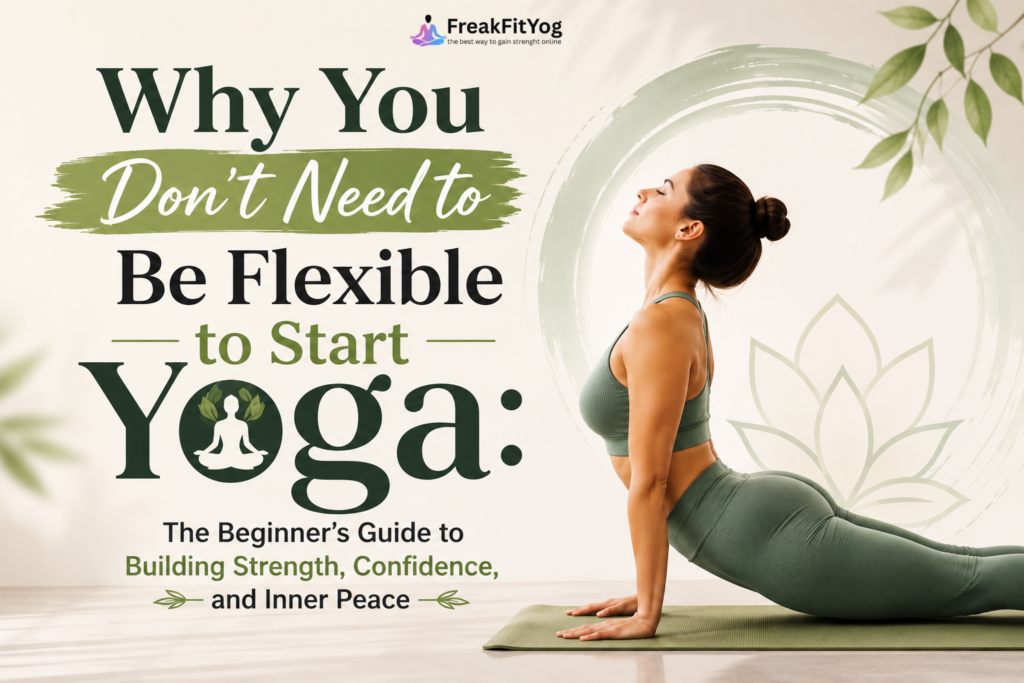
Why You Don't Need to Be Flexible to Start Yoga
Building strength, confidence, and inner peace — starting exactly where your body is today, stiffness and all. This is Yoga for Beginners, done right.
"I can't even touch my toes, how can I do yoga?"
Be honest — how many times have you scrolled past a yoga reel, watched someone fold themselves into a pretzel, and thought, "that's cute, but that's not for me"?
You're not alone. It's probably the single biggest reason people never step onto a yoga mat in the first place. They see the splits, the backbends, the impossibly calm influencer holding a headstand in a park, and they quietly close the app, convinced yoga is reserved for people who were basically born bendy.
Here's the truth nobody tells beginners loudly enough: flexibility is a result of yoga, not a requirement for it. Nobody walks into their first class able to touch their toes, hold a deep squat, or twist like a rubber band. Every single "flexible" person you admire started exactly where you are right now — stiff, self-conscious, and maybe a little intimidated.
This misconception stops thousands of people from ever experiencing what yoga can actually do for their body and mind — build real strength, calm an anxious brain, improve posture, help with fat loss, and create a sense of inner peace no gym machine can replicate. If you've been holding back because you think you're "too stiff," this guide on why you don't need to be flexible to start yoga is exactly what you need before you talk yourself out of it again. That's the whole idea behind real Yoga for Beginners — you start stiff, and you get stronger from there.
Meet FreakfitYog — yoga designed for real beginners
At FreakfitYog, we built our entire beginner program around one simple idea: yoga should meet you where you are, not where Instagram thinks you should be.
FreakfitYog isn't about competing with the person next to you or forcing your body into a shape it isn't ready for. It's about functional movement, breathing, strength-building, and consistency — the actual pillars that make yoga transformative.
Coaches who modify the pose to fit your body — not the other way around
Whether you're a complete newbie, someone recovering from a sedentary lifestyle, or a fitness enthusiast adding mobility work to your routine, programs at FreakfitYog progress you gradually and safely. This is one of the biggest reasons why you don't need to be flexible to start yoga when you're training with the right guidance: modifications exist for every single pose. It's Yoga for Beginners, built around your body, not an ideal one.
See Beginner Programs →FreakfitYog also blends traditional yoga with functional strength and mindful fat loss coaching, which means you're not just stretching — you're building a stronger, leaner, calmer version of yourself from day one.
What is a fat loss transformation, really?
When people hear "yoga," they often assume it's only about flexibility or relaxation — not physical transformation. But a proper fat loss transformation through yoga isn't about starving yourself or endless crunches. It's a holistic shift involving your metabolism, hormones, nervous system, and daily habits, all working together.
- → Reduced cortisol (stress hormone) levels, which directly impacts stubborn belly fat
- → Improved digestion and gut health, thanks to twisting and core-engaging poses
- → Better sleep quality, which regulates hunger hormones like ghrelin and leptin
- → Increased lean muscle activation, especially in Power Yoga or Vinyasa flow
- → Sustainable lifestyle change, not a crash diet abandoned in three weeks
Unlike high-intensity workouts that burn you out, yoga-based fat loss is gentle on your joints while still elevating your heart rate in dynamic sequences. The fat loss transformation programs at FreakfitYog combine breathwork, strength-based asanas, and mindful eating guidance so your body starts shedding fat while your mind actually enjoys the process.
5 real benefits of starting yoga (even if you're stiff as a board)
This is what a proper Yoga for Beginners practice actually builds — inside and out.
You build real, functional strength
Poses like Plank, Chaturanga, Warrior II, and Boat Pose demand serious core, shoulder, and leg strength. Holding your own bodyweight repeatedly builds muscular endurance that shows up as better posture and less back pain in everyday life.
Flexibility is a byproduct, not a prerequisite
This is the heart of why you don't need to be flexible to start yoga. Every pose has a modification — bent knees in a forward fold, a block under your seat. Over weeks of practice, flexibility becomes a result of showing up, not a ticket required for entry.
It dramatically reduces stress and anxiety
Yoga activates your parasympathetic nervous system through deep, controlled breathing. This lowers cortisol and slows your heart rate — many beginners describe it as the most surprising benefit of all.
It supports fat loss and boosts metabolism
Styles like Power Vinyasa raise your heart rate similarly to light cardio while building muscle, increasing your resting metabolic rate. Paired with better sleep and lower stress, your body is genuinely better equipped for sustainable fat loss.
It builds unshakeable confidence
There's a quiet power in doing something hard and watching yourself improve week after week. Beginners who start stiff and unsure often become the most consistent practitioners, because the progress feels earned.
Bonus: better sleep, spinal alignment, and joint health all improve with regular practice — no natural flexibility required to begin.
Common myths keeping beginners off the mat
Studios are full of every body type and age — including people who couldn't sit cross-legged on day one.
Backwards logic. You build flexibility through yoga, the same way you learn to swim by getting in the water.
Yoga engages your nervous system and metabolism in ways cardio alone doesn't, especially stress-related belly fat.
Power Yoga and Vinyasa flow move fast enough to leave you sweating — minus the joint strain of high-impact cardio.
How to get started, even with zero experience
Every good Yoga for Beginners journey follows the same simple steps.
Drop the comparison trap
Stop comparing your day-one body to someone else's five-year practice. Yoga is a conversation between you and your body, not a performance.
Choose beginner-friendly sessions
This is exactly where FreakfitYog helps — the beginner track is built for stiff, out-of-shape, or brand-new practitioners, with clear modifications at every step.
Invest in basic gear
A non-slip mat, comfortable stretchy clothing, and maybe a block or cushion for seated poses — nothing more is needed to start.
Start with 15–20 minutes
Short, consistent sessions build habit and confidence better than occasional long ones that leave you sore and demotivated.
Focus on breath, not depth
The depth will come naturally — breath control matters more than how far you bend on day one.
Book a trial class
Message the team on WhatsApp to get a trial session built around your current mobility and goals.
Tips to stay consistent (the part everyone struggles with)
Starting yoga is easy. Staying consistent is where most beginners fall off, usually within the first three weeks.
- 01 Schedule it like a meeting, not an option — consistency beats intensity every time.
- 02 Track small wins, not just weight loss — five extra seconds in Plank counts.
- 03 Join a community instead of going solo, for real accountability.
- 04 Don't skip "bad" days — show up anyway, even for ten gentle minutes.
- 05 Pair it with a clear fat loss transformation goal to stay motivated.
- 06 Reassess every four weeks — progress is often invisible day-to-day, obvious month-to-month.
- 07 Message your coach when you're stuck instead of quitting silently.
You don't need to be flexible to start yoga — you just need to start
Flexibility, strength, confidence, and inner peace aren't prerequisites; they're outcomes of consistent, guided practice. Every expert was once a beginner who couldn't touch their toes either.
Frequently asked questions
Do I need to be flexible to start yoga?
No. Every pose has a beginner modification, and flexibility develops naturally over weeks of practice — not something you need on day one.
Can yoga help with fat loss transformation?
Yes. Styles like Power Vinyasa raise your heart rate, build lean muscle, and lower cortisol — all of which support real, sustainable fat loss.
How many days a week should a beginner practice?
3–4 sessions of 15–20 minutes a week is ideal to start. Consistency matters far more than duration.
How do I get started with FreakfitYog?
Visit freakfityog.com or message us on WhatsApp for a free trial session.