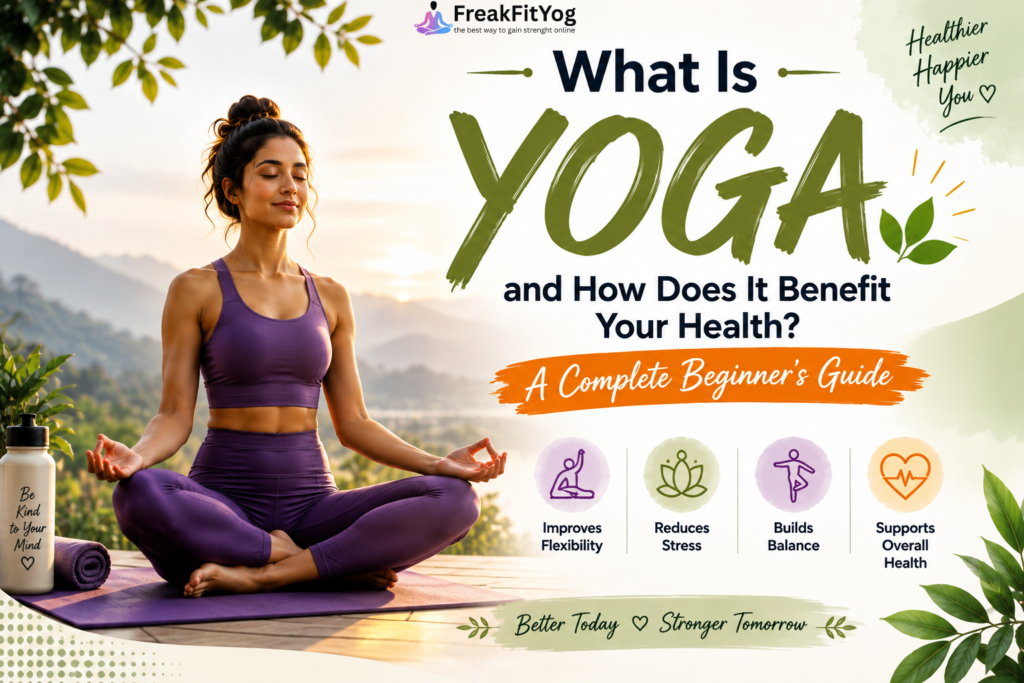
What Is Yoga and How Does It Benefit Your Health? A Complete Beginner’s Guide
Yoga has become a popular way to improve flexibility, strength, mobility, balance, relaxation, and overall well-being. Whether you are completely new to exercise or already follow a fitness routine, yoga can be adapted to suit your lifestyle and fitness level.
But what is yoga, and how can it benefit your health?
Yoga is more than a collection of stretching exercises. It is a mind-body practice that combines physical postures, breathing techniques, controlled movement, concentration, and mindfulness. With regular practice, yoga can become an important part of a balanced and healthy lifestyle.
Today, online yoga has also made yoga more accessible than ever. People can follow guided sessions from home without traveling to a studio, making it easier to build a consistent routine around work, family, and other responsibilities.
In this complete beginner’s guide, we will explain what yoga is, its major health benefits, different types of yoga, beginner-friendly poses, how often you should practice, and how online yoga classes can help you start your journey.
What Is Yoga?
Yoga is an ancient mind-body practice that combines physical postures, breathing exercises, concentration, and mindfulness.
The word yoga comes from the Sanskrit root yuj, which is commonly associated with joining or uniting. Traditionally, yoga developed as a broader philosophical practice. Today, it is also widely practiced as a form of physical activity and wellness.
People practice yoga for many different reasons, including:
- Improving flexibility
- Building strength
- Supporting balance
- Improving mobility
- Managing everyday stress
- Developing body awareness
- Practicing mindfulness
- Supporting relaxation
- Complementing other workouts
- Creating a healthier daily routine
- One of the biggest advantages of yoga is that it can be modified for different fitness levels.
- You do not have to be extremely flexible or physically fit before starting. Yoga for beginners can begin with simple poses, gentle stretches, basic breathing exercises, and short sessions
How Does Yoga Work?
Yoga combines several elements that work together to create a mind-body practice.
Physical Postures
Yoga poses, also known as asanas, involve controlled positions and movements that challenge flexibility, strength, balance, and stability.
Some common beginner poses include:
- Mountain Pose
- Child’s Pose
- Cat-Cow Pose
- Warrior II
- Tree Pose
- Cobra Pose
- Downward-Facing Dog
The purpose is not simply to make your body look like a particular shape. Good yoga practice involves controlled movement, breathing, awareness, and appropriate alignment.
Breathing Techniques
Breathing is another important part of yoga.
Different yoga practices use different breathing techniques. For beginners, learning to coordinate breathing with movement can help create a more focused and mindful practice.
Mindfulness
Yoga also encourages awareness of the present moment.
Instead of rushing through a workout, you pay attention to your breathing, movement, posture, and physical sensations.
This combination of movement and mindfulness is one reason yoga is commonly included in relaxation and wellness routines.
.
What Are the Benefits of Yoga?
The benefits of yoga can vary from person to person. Your results may depend on the type of yoga you practice, how often you practice, the intensity of your sessions, your current fitness level, and your overall lifestyle.
However, regular and appropriate yoga practice can support several areas of physical and mental well-being.
1. Improves Flexibility
Improved flexibility is one of the best-known yoga benefits.
Many yoga poses involve gentle stretching of different muscle groups. Regular practice can help you become more comfortable with certain movements and gradually improve mobility.
You do not need to be flexible before starting yoga.
Beginner-friendly poses such as Child’s Pose, Cat-Cow, Cobra Pose, Butterfly Pose, and gentle seated stretches can be included in a beginner routine.
The goal is gradual progress rather than forcing your body into a position.
2. Supports Strength and Stability
Yoga is not only about stretching.
Many poses require you to support your body weight and maintain controlled positions.
For example, Plank can challenge the core and upper body, while Warrior poses can challenge the legs and improve stability.
Other poses can require coordination between different muscle groups.
With consistent practice, yoga can complement other forms of exercise by supporting muscular endurance, stability, and body control.
3. Supports Better Balance
Balance is important for everyday movement and physical fitness.
Yoga includes many standing and single-leg poses that require concentration and stability.
Tree Pose is a simple example that beginners can practice with support nearby if necessary.
Balance improves gradually through practice. You do not need to hold an advanced pose immediately.
4. Helps With Everyday Stress
One of the most common reasons people turn to yoga is relaxation.
Busy schedules, work pressure, screen time, and daily responsibilities can make it difficult to slow down.
Yoga provides dedicated time to move, breathe, and focus.
Gentle yoga combined with controlled breathing can become part of a stress-management routine.
Although yoga cannot remove every source of stress, it can provide a healthy way to pause and create time for relaxation.
5. Encourages Body Awareness
Yoga teaches you to pay attention to your body.
During practice, you may notice:
- Muscle tension
- Breathing patterns
- Posture
- Balance
- Movement limitations
- Physical sensations
- Energy levels
This awareness can help you understand your body better and make more mindful movement decisions.
Instead of simply trying to complete as many exercises as possible, yoga encourages you to focus on how you move and how your body feels.
6. Supports Mobility
Mobility refers to your ability to actively control movement through a range of motion.
Yoga includes controlled movements that involve the spine, shoulders, hips, legs, and other areas of the body.
This can make yoga particularly useful for people who spend long periods sitting.
A short movement routine during the day can provide an opportunity to move areas of the body that may remain inactive for extended periods.
7. Can Complement a Weight-Management Routine
Can yoga help with weight loss?
Yoga can be part of a healthy lifestyle that supports weight management.
Some more active forms of yoga can provide a physical challenge, while gentler forms can support mobility, relaxation, and consistency.
However, yoga should not be considered a standalone solution for weight loss.
Sustainable weight management generally involves a combination of:
- Balanced nutrition
- Regular physical activity
- Adequate sleep
- Consistent habits
- Appropriate calorie intake
Yoga can complement activities such as walking, strength training, cardio, and other forms of exercise.
8. May Support Better Sleep
A gentle yoga session can become part of a relaxing evening routine.
Slow stretching, breathing exercises, and relaxation-focused poses can help you create a calm transition between your daytime activities and bedtime routine.
For evening practice, choose gentle movements instead of highly intense sequences if relaxation is your goal.
A simple routine might include:
- Gentle breathing
- Cat-Cow
- Child’s Pose
- Seated stretching
- Gentle forward folds
- Relaxation
Persistent sleep problems should be discussed with an appropriate healthcare professional.
9. Supports Mindfulness
Yoga encourages you to focus on the present moment.
While practicing a pose, you may concentrate on your breathing, posture, balance, and physical sensations.
This can help make your exercise session more mindful instead of simply focusing on completing repetitions.
Mindfulness is an important part of many traditional yoga practices and is one reason people include yoga in their wellness routines.
10. Helps Create a Consistent Fitness Routine
One of the biggest advantages of yoga is its flexibility.
You can practice yoga:
- At home
- At a studio
- Outdoors
- In a group
- Through online yoga
- With short beginner sessions
You do not need a large amount of equipment.
A yoga mat, comfortable clothing, enough space, and suitable guidance can be enough for many beginner routines.
For people with busy schedules, online yoga classes can make structured practice more convenient.
What Are the Different Types of Yoga?
There are many different yoga styles, and each one can offer a different experience.
Hatha Yoga
Hatha yoga generally focuses on physical postures, breathing, and controlled movement. It can be a useful introduction for people who prefer a slower and structured practice.
Vinyasa Yoga
Vinyasa connects movement with breathing in flowing sequences. It can be more dynamic and physically demanding than slower styles.
Restorative Yoga
Restorative yoga emphasizes relaxation and supported positions. It is generally slower and focuses on creating a calming practice.
Power Yoga
Power yoga usually involves more physically demanding movements and can provide a stronger workout.
Yin Yoga
Yin yoga involves slower movements and longer-held positions, often emphasizing gentle stretching and relaxation.
Beginner Yoga
Beginner yoga focuses on foundational poses, breathing, alignment, and controlled movement.
If you are new to yoga, choose a style that matches your current fitness level rather than attempting an advanced practice immediately.
What Are the Best Yoga Poses for Beginners?
You do not need to learn dozens of poses when starting.
A few simple poses can help you become familiar with yoga.
Mountain Pose
Mountain Pose is a basic standing position that encourages awareness of posture and alignment.
Child’s Pose
Child’s Pose is commonly used as a gentle resting position during yoga sessions.
Cat-Cow Pose
Cat-Cow involves controlled movement of the spine and can be useful as part of a warm-up.
Downward-Facing Dog
This popular pose involves the arms, shoulders, spine, hips, and legs. Beginners can modify it according to their comfort.
Warrior II
Warrior II challenges the legs, hips, posture, and stability.
Tree Pose
Tree Pose challenges balance and concentration. Beginners can use a wall for support.
Cobra Pose
Cobra Pose is a gentle backbend that can be modified according to comfort and mobility.
Remember that correct technique and comfortable movement are more important than achieving a perfect-looking pose.
How Long Should Beginners Practice Yoga?
You do not need to practice yoga for an hour every day.
Beginners can start with approximately 10–20 minutes per session, depending on their comfort level.
You can gradually increase your practice as you become more familiar with the movements.
For example:
Week 1: 10 minutes, 3 days per week
Week 2: 15 minutes, 3–4 days per week
Week 3: 20 minutes, 4 days per week
Week 4: 20–30 minutes, 4–5 days per week
This is only a general example. Your ideal routine should depend on your individual needs and schedule.
Consistency is more important than trying to do too much too quickly.
Is Morning or Evening Better for Yoga?
There is no universal best time to practice yoga.
The best time is the time you can maintain consistently.
Morning Yoga
Morning yoga can help you start your day with movement, breathing, and mindfulness.
Evening Yoga
Evening yoga can help you transition from a busy day toward a more relaxed routine.
Yoga During the Day
If you sit for long periods, a short yoga or mobility session can provide a useful movement break.
Choose the time that works best for your lifestyle.
Can You Do Yoga at Home?
Yes. Yoga is one of the most convenient forms of exercise to practice at home.
You can create a simple yoga space with:
- A yoga mat
- Comfortable clothes
- Enough floor space
- Water
- A guided routine
Online yoga makes this even more convenient because you can follow structured sessions without traveling to a physical studio.
With online yoga classes for beginners, you can learn basic poses, breathing techniques, and movement patterns from home while following a structured session.
For people with busy work or family schedules, this flexibility can make it easier to maintain a regular practice.
How Can Online Yoga Help Beginners?
One of the biggest advantages of online yoga is convenience.
Instead of traveling to a studio, you can participate in a guided session from your home.
Online classes can provide:
- Flexible scheduling
- Home-based practice
- Guided instruction
- Beginner-friendly sessions
- Different yoga styles
- Structured routines
- Convenient access to instructors
For someone who is new to yoga, following a structured class can be easier than trying to create a routine from random exercises.
If you are looking for guided online yoga classes, FreakFitYog provides yoga programs that allow you to practice from the comfort of your home.
Explore FreakFitYog: https://freakfityog.com/
How to Start a Daily Yoga Routine
Starting yoga does not need to be complicated.
Follow these simple steps.
1. Choose a Realistic Time
Select a time when you are least likely to be interrupted.
2. Start With Short Sessions
Begin with 10–20 minutes rather than trying to complete a long session.
3. Learn Basic Poses
Focus on foundational movements before attempting advanced poses.
4. Focus on Breathing
Try to maintain comfortable and controlled breathing throughout your practice.
5. Practice Consistently
A short routine that you follow regularly can be more sustainable than occasional long sessions.
6. Progress Gradually
Increase the duration or difficulty only when you feel comfortable.
7. Listen to Your Body
Do not force a movement into pain or discomfort.
Common Yoga Mistakes Beginners Should Avoid
Attempting Advanced Poses Too Soon
You do not need difficult poses to experience the benefits of yoga.
Build your foundation first.
Ignoring Pain
A stretch may feel challenging, but significant or sharp pain should not be ignored.
Stop and seek appropriate guidance if necessary.
Comparing Yourself With Others
Everyone has different levels of flexibility, strength, balance, and mobility.
Focus on your own progress.
Holding Your Breath
Breathing is an important part of yoga. Avoid unnecessarily holding your breath.
Practicing Without Appropriate Guidance
Beginners can benefit from learning correct techniques and modifications from a qualified instructor.
Who Can Practice Yoga?
Yoga can be adapted for many different people and fitness levels.
It may be suitable for:
- Beginners
- Working professionals
- Homemakers
- Older adults
- People seeking gentle movement
- People interested in flexibility
- People interested in mindfulness
- People looking for convenient home workouts
However, yoga should be adapted to individual needs.
If you have an injury, significant pain, a medical condition, or specific physical limitations, seek appropriate professional advice before beginning a new exercise routine.
Frequently Asked Questions About Yoga
1 What is yoga in simple words?
Yoga is a mind-body practice that combines physical postures, breathing, movement, concentration, and mindfulness. People practice yoga for fitness, flexibility, relaxation, mobility, and overall well-being.
2 What are the main benefits of yoga?
The main benefits include improved flexibility, strength, balance, mobility, body awareness, relaxation, mindfulness, and support for a consistent healthy lifestyle.
3 Is yoga good for beginners?
Yes. Yoga can be modified for beginners. Starting with basic poses and short sessions can make the practice easier to learn.
4 Can yoga help with weight loss?
Yoga can complement a healthy weight-management routine. More active forms can contribute to physical activity, while gentler practices can support mobility and relaxation.
5 How long should I practice yoga?
Beginners can start with approximately 10–20 minutes per session and gradually increase the duration as they become more comfortable.
6 Can I do yoga at home?
Yes. Yoga can be practiced at home using a mat and suitable guidance. Online yoga can make home practice even more convenient.
7 Is online yoga good for beginners?
Yes. Online yoga classes for beginners can provide structured guidance, basic poses, breathing techniques, and routines that can be followed from home.
8 Is morning or evening yoga better?
Both can be effective. Morning yoga can help you start your day with movement, while evening yoga can be useful for relaxation. The best time is the one you can practice consistently.
9 Does yoga improve flexibility?
Regular yoga practice can support flexibility and mobility over time. Progress varies between individuals, so stretching should be gradual and comfortable.
10 What is the best yoga for beginners?
Gentle yoga, beginner Hatha yoga, basic mobility sessions, and guided beginner classes can be good starting points.
Final Thoughts
So, what is yoga and how does it benefit your health?
Yoga is a versatile mind-body practice that can support flexibility, strength, balance, mobility, relaxation, mindfulness, and overall wellness.
You do not need to be flexible before starting yoga.
You do not need expensive equipment.
You do not need to spend hours practicing every day.
Start with a comfortable routine, learn the basics, practice consistently, and gradually progress.
For people who want flexibility and convenience, online yoga can make it easier to build a regular practice from home.
Whether you prefer a short morning session, an evening relaxation routine, or structured online yoga classes, the most important step is simply getting started.
Begin Your Yoga Journey With FreakFitYog
If you are looking for convenient online yoga classes that you can follow from home, explore FreakFitYog and discover a structured approach to making yoga part of your everyday wellness routine.
Visit FreakFitYog: https://freakfityog.com/