6 Tips to Deepen Your Meditation Practice
Introduction: When Your Mind Just Won’t Slow Down
You sit down to meditate, close your eyes, and expect peace. Instead, your mind suddenly remembers yesterday’s conversation, tomorrow’s responsibilities, your unfinished work, and everything else you were trying not to think about.
If this sounds familiar, you are not failing at meditation.
In fact, having a busy mind is one of the most common reasons people struggle to build a consistent meditation practice. Meditation is not about forcing your thoughts to disappear. It is about learning to observe those thoughts without allowing them to control you.
With the right approach, even a few quiet minutes each day can become a powerful opportunity to reconnect with yourself.
In this guide, you’ll discover six simple ways to deepen your meditation, create a sustainable routine, and make mindfulness a natural part of everyday life.
What Is Meditation?
Meditation is a practice of training your attention and awareness. Depending on the technique, you may focus on your breathing, bodily sensations, a mantra, sounds, or simply observe your thoughts.
The goal isn’t necessarily to have a completely empty mind.
Instead, meditation teaches you to notice what is happening in the present moment and gently return your attention whenever your mind wanders.
For someone starting meditation for beginners, this distinction is important. You don’t need perfect concentration or hours of free time. You simply need a willingness to pause and practice.
Over time, regular meditation can support relaxation, awareness, focus, and emotional balance.
How FreakFitYog Can Support Your Wellness Journey
Meditation becomes easier when you don’t have to figure everything out alone.
At FreakFitYog, we believe wellness involves more than physical movement. Yoga, mindfulness, breathing exercises, and meditation can work together to create a balanced approach to health and everyday wellbeing.
Our guided sessions can help you understand proper techniques, develop consistency, and create a routine that fits your lifestyle.
Whether you are completely new to meditation or already have experience, structured guidance can make the journey feel simpler and more enjoyable.
6 Tips to Deepen Your Meditation Practice
1. Create a Dedicated Meditation Space
Your environment can influence your ability to settle down.
You don’t need a large meditation room. A small, clean corner of your bedroom, living room, balcony, or home office can work perfectly.
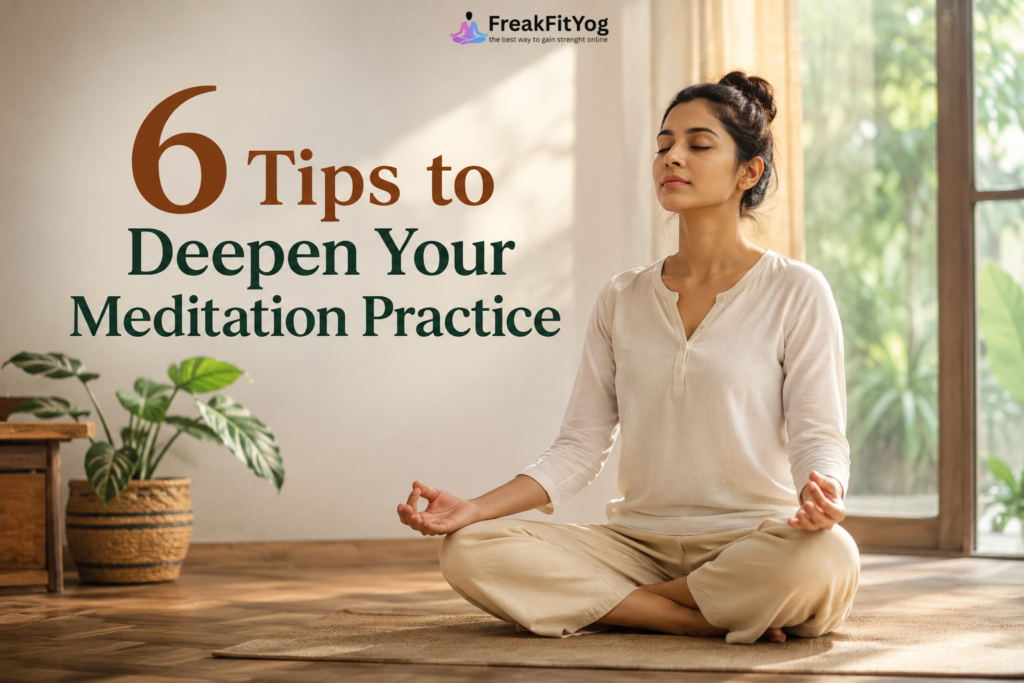
Choose a place where you can sit comfortably without frequent interruptions. Keep it simple. You might add a yoga mat, cushion, plant, or anything that makes the space feel peaceful.
Using the same place regularly can also create a psychological association between that space and relaxation.
When you sit there, your mind gradually begins to recognize that it is time to slow down.
2. Be Consistent Instead of Trying to Be Perfect
One of the biggest mistakes people make is meditating for a long time once or twice a week and expecting immediate results.
Consistency matters more than duration.
Start with five to ten minutes. If that feels manageable, gradually increase the duration.
Try connecting your meditation to an existing habit. For example, meditate after brushing your teeth in the morning or before going to bed.
A regular daily meditation routine can become much easier when it is attached to something you already do.
Remember: missing one day doesn’t mean you’ve failed. Simply return to your practice the next day.
3. Use Your Breath as an Anchor
Your breath is always with you, which makes it a simple and effective meditation anchor.
Sit comfortably and notice the natural rhythm of your breathing.
You don’t need to force deep breaths. Simply observe the sensation of inhaling and exhaling.
Your mind will wander. That’s normal.
When you notice that you’ve started thinking about something else, gently bring your attention back to your breath.
That moment of noticing and returning is actually part of the practice.
Each time you return to your breath, you are training your attention.
This simple technique is especially useful for people beginning mindfulness meditation because it gives the mind something specific to focus on.
4. Start Small and Gradually Go Deeper
Longer meditation sessions aren’t automatically better.
If you are new to meditation, sitting for 30 or 60 minutes may feel uncomfortable and discouraging.
Instead, begin with a realistic target.
Try:
5 minutes for the first week
10 minutes as you become comfortable
15–20 minutes when your concentration improves
Longer sessions only when they feel natural
The purpose is to develop a sustainable habit rather than compete with a clock.
Even a short session can give you an opportunity to pause, breathe, and reconnect with the present.
As your confidence grows, you can explore deep meditation techniques and longer sessions.
5. Try Guided Meditation
Sometimes the hardest part of meditation is wondering, “What am I supposed to do now?”
That’s where guided sessions can help.
A teacher or guided recording can give you instructions about breathing, body awareness, relaxation, visualization, or mindfulness.
Guided meditation can be particularly useful when your attention frequently wanders or you don’t know which technique suits you.
It can also introduce you to different approaches without making you feel like you have to learn everything at once.
At FreakFitYog, guided wellness practices can help make meditation feel approachable, structured, and easier to incorporate into your routine.
6. Practice Patience and Self-Compassion
This may be the most important tip of all.
Some days your meditation will feel peaceful. Other days your mind may feel incredibly busy.
Both experiences are normal.
Don’t judge yourself because you couldn’t concentrate.
Don’t assume meditation isn’t working because you didn’t feel instantly relaxed.
And don’t compare your experience with someone else’s.
Meditation is a personal practice.
Approach yourself with curiosity instead of criticism. Notice what you experience, learn from it, and return to your practice.
The more patiently you practice, the easier it becomes to build a meaningful relationship with stillness and awareness.
Benefits of Developing a Regular Meditation Practice
A consistent meditation practice can become a valuable part of a broader wellness routine.
1. Helps You Manage Everyday Stress
Modern life rarely gives the mind a genuine opportunity to pause.
Work, notifications, responsibilities, and constant information can leave you feeling mentally overloaded.
Meditation creates intentional space to step away from that constant stimulation.
Even a few quiet minutes can give you an opportunity to slow your breathing and observe your thoughts.
2. Supports Better Focus
Your attention naturally moves from one thought to another.
Meditation repeatedly trains you to notice when your attention has wandered and bring it back.
That simple process may help you become more aware of where your attention goes throughout the day.
Over time, this can complement other habits that support concentration and productivity.
3. Encourages Emotional Awareness
Instead of immediately reacting to every thought or emotion, meditation encourages observation.
You may begin noticing patterns in your reactions, thoughts, and feelings.
This doesn’t mean suppressing emotions.
It means creating a little more space between experiencing something and automatically responding to it.
4. Supports Relaxation and Better Wellbeing
Meditation can become a calming ritual, particularly when practiced consistently.
Combining meditation with gentle yoga, stretching, breathing exercises, and healthy lifestyle habits can create a well-rounded wellness routine.
The objective isn’t to eliminate every source of stress from life. That’s unrealistic.
Instead, meditation can give you a regular moment to pause and reset.
5. Builds Greater Self-Awareness
When you spend time observing your thoughts, you may begin to recognize recurring patterns.
You might notice when you tend to worry, overthink, become distracted, or react emotionally.
This awareness can help you make more intentional choices.
That is one reason mindfulness meditation can be valuable beyond the meditation cushion. The awareness you practice during meditation can gradually influence how you approach everyday situations.
6. Creates a Moment of Personal Connection
Perhaps the most underrated benefit is simply having time for yourself.
Your meditation session can become a small daily reminder that you deserve time to breathe, pause, and reconnect.
For people with demanding schedules, that intentional pause can feel surprisingly meaningful.
How to Get Started With Meditation
Starting doesn’t need to be complicated.
Follow this simple routine:
Step 1: Choose your time.
Pick a time when interruptions are less likely.
Step 2: Find a comfortable position.
You can sit on a cushion, yoga mat, or chair. Comfort is more important than achieving a complicated posture.
Step 3: Set a timer.
Start with five minutes.
Step 4: Close your eyes or soften your gaze.
Take a few natural breaths.
Step 5: Focus on your breath.
Notice the sensation of breathing without trying to control it.
Step 6: Notice distractions.
When thoughts appear, acknowledge them without judgment.
Step 7: Return to your anchor.
Bring your attention back to your breathing.
Step 8: Finish slowly.
When the timer ends, take a moment before returning to your normal activities.
That’s it.
You don’t need expensive equipment or a perfect environment to begin.
Tips to Stay Consistent
Knowing how to meditate is one thing. Actually maintaining the habit is another.
Here are practical ways to make your routine easier:
Keep Your Goal Realistic
Don’t promise yourself that you’ll meditate for an hour every day if your schedule doesn’t allow it.
A realistic five-minute routine is better than an ambitious routine you abandon after three days.
Attach Meditation to a Habit
Pair your session with something you already do.
For example:
Wake up → drink water → meditate → begin your day.
The more predictable the sequence becomes, the less effort it takes to remember.
Keep Your Meditation Space Ready
If your cushion or mat is already prepared, you’re more likely to sit down and begin.
Remove unnecessary friction wherever possible.
Track Your Progress
You can use a simple calendar or journal.
Don’t only record how many days you meditated. Write down how you felt before and after your sessions.
You may start noticing patterns over time.
Don’t Start Over Every Monday
If you miss a session, don’t wait for a new week or a new month.
Continue the next day.
Progress comes from returning, not from being perfect.
Explore Different Techniques
If one method feels boring or uncomfortable, experiment.
You can explore breath awareness, body scans, visualization, mantra-based practices, or guided sessions.
Finding an approach you genuinely enjoy can make your routine much easier to maintain.
Meditation and Yoga: A Powerful Combination
Yoga and meditation complement each other beautifully.
Yoga can help you become more aware of your body and breathing, while meditation allows you to turn that awareness inward.
A simple routine could look like:
Gentle yoga → breathing exercises → meditation → quiet reflection
You don’t need to spend hours doing each activity.
Even a short combination can create a calming transition between physical activity and the rest of your day.
At FreakFitYog, the focus is on making wellness practical and approachable so you can build habits that fit real life.
Final Thoughts
Deepening meditation isn’t about becoming someone who never thinks, worries, or gets distracted.
It’s about learning how to meet those experiences with greater awareness.
Start small. Create a peaceful environment. Focus on your breath. Explore guided sessions. Most importantly, be patient with yourself.
The goal isn’t perfection.
The goal is to keep returning.
A few mindful minutes today can become a meaningful daily ritual tomorrow.
If you’re ready to bring yoga, meditation, and mindfulness into your wellness journey, explore FreakFitYog and discover a supportive way to make your practice part of everyday life.
Frequently Asked Questions
1. How long should I meditate each day?
If you’re new to meditation, start with 5–10 minutes a day. Once you become comfortable, you can gradually increase the duration. Consistency is generally more important than forcing yourself to meditate for long periods.
2. Can beginners practice deep meditation?
Yes. Beginners can gradually develop deeper meditation through regular practice, patience, and appropriate guidance. Start with simple breathing awareness and increase the duration or explore new techniques as you become comfortable.
3. What is the best time to meditate?
There isn’t one universally perfect time. Morning can be useful because it allows you to begin the day calmly, while evening meditation can help create a relaxing transition before bedtime. Choose a time you can maintain consistently.
4. Do I need a teacher to learn meditation?
Not necessarily. You can begin with basic techniques independently. However, guided meditation or support from an experienced instructor can be helpful if you want structured learning, accountability, or assistance choosing techniques.
Ready to Deepen Your Practice?
Give yourself a few quiet minutes today.
Breathe. Pause. Observe. Begin again.
FreakFitYog — Mind. Body. You.