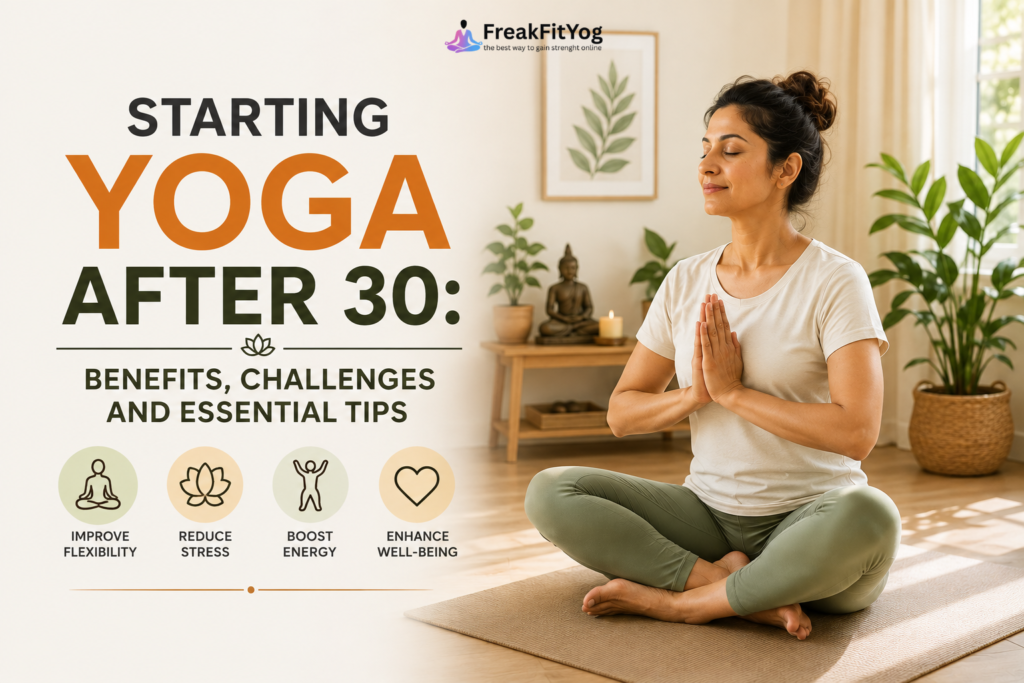
Starting Yoga After 30: Benefits, Challenges and Essential Tips
You wake up, and your back complains before your alarm even finishes ringing. You sit at a desk for nine hours, get up, and your knees crack like autumn leaves. You used to run 5Ks without thinking twice — now, just climbing two flights of stairs leaves you a little breathless. Sound familiar?
If you’re in your 30s and starting to feel like your body isn’t quite “yours” anymore, you’re not alone. This is one of the most common turning points in adult life — the moment when work stress, sleepless nights, poor posture, and a sedentary lifestyle finally start showing up on your body and your mind. And it’s exactly the moment many people start Googling things like “is it too late to start yoga” or “best exercise after 30 for beginners.”
Here’s the good news: it’s not too late. In fact, it might be the perfect time. Starting Yoga After 30: Benefits, Challenges and Essential Tips is a conversation worth having, because your 30s are when your body starts asking for a different kind of care — not harder workouts, but smarter ones. And yoga after 30, done right, is exactly that.
In this blog, we’ll walk you through why yoga after 30 works so well, the real challenges beginners face, how a fat loss transformation actually happens through yoga, the biggest benefits you can expect, the best way to begin, and practical tips to help you stay consistent — even when life gets busy.
The Problem Most People in Their 30s Are Facing
Let’s be honest about what changes after 30. Metabolism starts to slow down. Muscle mass naturally begins to decline if you’re not actively working on it. Stress hormones like cortisol start playing a bigger role in weight gain, especially around the belly. Add in desk jobs, phone-scrolling posture, and irregular sleep, and you’ve got a recipe for stiffness, fatigue, and that nagging feeling that you’re “not as fit as you used to be.”
Many people try to fix this with intense gym routines or crash diets, only to burn out in a few weeks. The body that could bounce back easily at 22 doesn’t respond the same way at 32 or 35. This is where a mismatch happens — people push too hard, get injured or exhausted, and give up entirely. Others do nothing at all because the idea of “starting over” with fitness feels overwhelming.
There’s also a quieter problem that doesn’t get talked about enough: mental fatigue. Juggling careers, relationships, finances, and sometimes parenting by your 30s means your nervous system is often running on overdrive. Physical stiffness and mental stress feed off each other — tight shoulders make you more irritable, poor sleep makes your body hold onto fat, and constant low-grade anxiety makes it harder to stick to any routine at all.
This is exactly the gap that starting yoga after 30 aims to close — a sustainable, low-impact, high-reward way to reclaim your strength, flexibility, and energy without wrecking your joints or your motivation.
A Simple, Sustainable Solution
This is where a structured approach to yoga after 30 comes in — one built for exactly this stage of life, for people who want to feel strong, flexible, and energetic again, without a punishing, one-size-fits-all fitness program.
The focus isn’t just on flexibility — it’s on a complete, beginner-friendly system that combines yoga, mindful movement, and lifestyle guidance to help you feel like yourself again. Whether you’re recovering from years of desk-bound stiffness, trying to shed stubborn weight, or simply looking for a calmer, more sustainable way to move your body, guided sessions designed specifically for adults starting their fitness journey after 30 can make all the difference.
What makes this approach different is simple: no shame, no unrealistic expectations, and no “no pain, no gain” pressure. Just guided, progressive sessions of yoga after 30 that meet you exactly where you are. Sessions are typically offered online, so you can practice from home, at a time that suits your schedule, without the added stress of commuting to a studio. This flexibility is a big reason why online yoga has become so popular among working professionals in their 30s and 40s.
If you’ve been putting off starting because you’re worried about being “too stiff” or “too out of shape,” this kind of supportive environment makes the first step much easier.
Visit Website: freakfityog
Or if you’d rather chat with someone directly about which plan suits you best, message on WhatsApp here:
Join Now What Is a Fat Loss Transformation, Really?
Before diving into benefits, let’s clear up a common misconception. A fat loss transformation isn’t just about the number on the scale dropping. It’s a full-body and full-mind shift — where your metabolism becomes more efficient, your muscle-to-fat ratio improves, your energy levels stabilize, and your relationship with food and movement becomes healthier.
Through yoga, fat loss doesn’t happen through extreme calorie-burning sessions. It happens through a combination of:
- Increased muscle engagement — many yoga poses (like planks, warrior poses, and chair pose) build lean muscle, which naturally boosts metabolism.
- Better digestion and hormonal balance — twisting poses and breathing techniques support gut health and reduce cortisol, a hormone directly linked to belly fat.
- Reduced stress-eating — the mindfulness component of yoga helps you become more aware of emotional eating patterns.
- Improved sleep quality — better sleep directly supports fat metabolism and recovery.
- Consistency over intensity — because yoga is low-impact and enjoyable, people tend to stick with it far longer than high-intensity programs, and consistency is what ultimately drives fat loss.
A typical fat loss transformation through yoga unfolds in stages. In the first two to three weeks, most people notice better energy and less bloating. Around week four to six, clothes start to fit differently even before the scale moves much, because muscle tone is improving and water retention (often linked to stress and poor sleep) starts to reduce. By week eight to twelve, with consistent practice and mindful eating, visible fat loss usually becomes noticeable, along with improved stamina and a leaner, more toned appearance.
This is why a true fat loss transformation through yoga tends to be more sustainable than crash diets or extreme workouts. It’s not about punishing your body — it’s about working with it. This is the philosophy behind every well-structured yoga after 30 program.
The Real Challenges of Starting Yoga After 30
It’s important to be honest — starting yoga after 30 does come with a few real challenges, especially if you’re new to regular exercise. Knowing these upfront helps you push through them instead of giving up early.
1. Stiffness and limited flexibility Years of sitting, poor posture, and inactivity mean your hamstrings, hips, and shoulders may feel tight at first. This is completely normal and improves steadily with consistent practice — you don’t need to be flexible to start yoga; you get flexible by doing it.
2. Time constraints Between work, family, and everyday responsibilities, carving out 30-45 minutes can feel impossible. This is why short, structured sessions work better than vague “do yoga sometime today” intentions.
3. Comparing yourself to others Scrolling through social media and seeing advanced yoga poses can be discouraging for beginners. It’s important to remember that yoga is not a competition — it’s a personal practice.
4. Fear of injury Many beginners worry about hurting their back or knees, especially if they already have some stiffness or old injuries. This is why guided instruction matters so much — proper alignment prevents injury far better than guesswork from YouTube videos.
5. Motivation dips Like any new habit, motivation naturally rises and falls. The first two weeks are usually the hardest, often called the “yoga plateau of doubt,” where soreness is real but visible progress hasn’t shown up yet.
6. Not knowing which style to choose With so many types of yoga out there — Hatha, Vinyasa, Power Yoga, Yin, Restorative — beginners often feel overwhelmed trying to pick the “right” one. The truth is, most beginner-friendly programs blend a few styles together so you get flexibility, strength, and relaxation all in one place, without needing to choose upfront.
The good news? Every single one of these challenges is manageable with the right guidance, structure, and support — which is exactly what a well-designed program of yoga after 30 is meant to provide.
Benefits of Starting Yoga After 30
Now let’s get to the exciting part — what you actually gain when you commit to yoga after 30.
1. Improved Flexibility and Joint Mobility
As we age, our joints naturally lose some range of motion, especially if we’re not moving them regularly. Yoga gently and progressively restores flexibility in the hips, spine, shoulders, and hamstrings — areas that get especially tight from sitting for long hours. Over just a few weeks of consistent practice, many beginners notice they can bend, twist, and reach further than they could when they started.
2. Support for Fat Loss Transformation
As discussed earlier, yoga contributes to a genuine fat loss transformation by building lean muscle, regulating stress hormones, and improving digestion. Styles like Power Yoga or Vinyasa Flow (often included in beginner-friendly plans) can also elevate heart rate enough to support calorie burn, while still being far gentler on joints than high-impact cardio.
3. Better Posture and Back Pain Relief
Desk jobs are brutal on the spine. Yoga strengthens the core and back muscles that support good posture, while also releasing tension built up from hours of sitting. Many people starting yoga after 30 report noticeable reductions in chronic lower back pain and neck stiffness within just a few weeks.
4. Reduced Stress and Better Mental Clarity
Your 30s often come with more responsibility — career pressure, family obligations, financial planning. Yoga’s breathing techniques (pranayama) and mindfulness practices activate the parasympathetic nervous system, helping to lower cortisol and reduce anxiety. This isn’t just a “feel good” claim — it’s one of the most well-documented benefits of regular yoga practice.
5. Increased Strength Without High Impact
Contrary to popular belief, yoga isn’t just stretching — poses like plank, warrior II, and boat pose build real functional strength in your core, arms, and legs, without the joint strain that comes from heavy weightlifting or high-impact cardio. This makes it ideal for people over 30 who want strength gains without risking injury.
6. Better Sleep Quality
Struggling to 77 fall asleep or stay asleep is incredibly common in your 30s, thanks to stress and screen time. Gentle evening yoga sequences and breathing exercises signal to your nervous system that it’s time to wind down, leading to deeper, more restorative sleep.
7. Better Hormonal Balance
Many people don’t realize how closely yoga is linked to hormonal health. Twisting and inversion poses stimulate the thyroid and adrenal glands, which play a major role in metabolism and energy levels. For women especially, regular yoga practice has been associated with more regular cycles and reduced PMS symptoms, while for both men and women it helps manage cortisol, the primary stress hormone responsible for stubborn belly fat.
8. Improved Focus and Productivity
Because yoga trains your breath and attention together, regular practitioners often report sharper focus and better decision-making at work. This is an underrated benefit for people in their 30s juggling demanding careers — a calmer nervous system simply performs better under pressure.
9. A Sustainable, Long-Term Fitness Habit
Perhaps the biggest benefit of all: yoga is something you can realistically do for the rest of your life. Unlike extreme workout trends that fizzle out after a few months, yoga adapts to your body as it changes over the years — making it one of the most sustainable fitness practices available.
If any of these benefits sound like exactly what you need right now, this is a great moment to check out beginner programs of yoga after 30 — designed specifically to help people in their 30s (and beyond) get these results safely and sustainably.
Visit Website: https://freakfityog.com/
How to Get Started With Yoga After 30
Starting doesn’t need to be complicated. Here’s a simple, beginner-friendly roadmap:
Step 1: Start with beginner-level sessions, not advanced ones. Resist the urge to jump into intense classes because you feel like you “should” be able to keep up. Begin with foundational poses and breathing techniques.
Step 2: Choose a structured program over random YouTube videos. While free content has its place, a structured program ensures proper progression, correct alignment, and guidance tailored to beginners, which significantly reduces injury risk and keeps you motivated. You can browse structured options for yoga after 30 at freakfityog
Step 3: Set a realistic schedule. Three sessions a week of 20-30 minutes is far more sustainable — and effective — than an ambitious daily routine you’ll abandon within two weeks.
Step 4: Invest in basic essentials. A good yoga mat, comfortable breathable clothing, and a quiet space are really all you need to begin. You don’t need expensive equipment or a fancy studio membership to get started.
Step 5: Warm up before diving into poses. Especially after 30, a five-minute warm-up of gentle neck rolls, wrist circles, and light stretching helps prepare stiff joints and reduces the risk of strain during your session.
Step 6: Track how you feel, not just how you look. In the early weeks, focus on improvements in energy, sleep, mood, and flexibility rather than obsessing over the scale. The physical fat loss transformation follows naturally once these foundations are in place.
Step 7: Get guidance if you’re unsure. If you’re not sure which style of yoga suits your body or goals, reach out directly and get personalized guidance on where to start.
Join Now Tips to Stay Consistent (Even When Life Gets Busy)
Starting is one thing — staying consistent is where most people struggle. Here are some practical, real-world tips:
- Anchor your practice to an existing habit. Do your yoga session right after brushing your teeth in the morning, or right before your evening shower. Habit-stacking makes new routines stick faster.
- Keep sessions short on busy days. A 15-minute session is infinitely better than skipping entirely. Consistency matters more than duration.
- Join a guided program instead of going solo. Accountability massively improves consistency. Structured programs for yoga after 30 keep you engaged with a clear plan instead of leaving you to figure things out alone.
- Track small wins. Notice when you can touch your toes a little further, hold a pose a little longer, or feel calmer after a stressful day. These small victories build long-term motivation.
- Don’t aim for perfection. Missing a day or a week doesn’t mean you’ve failed — it means you’re human. Just get back on the mat.
- Make it enjoyable, not punishing. Choose sessions that feel good, not ones that leave you dreading your next practice. This is especially important for beginners looking for fun, engaging workouts rather than intense, joyless routines.
- Practice with others when possible. Group sessions, even online ones, add a layer of accountability and community that’s hard to replicate when practicing entirely alone. Knowing others are showing up too can be surprisingly motivating.
- Reach out for support when motivation dips. Sometimes all it takes is a quick conversation to get back on track.
Join Now Final Thoughts
Starting yoga after 30 isn’t about chasing the fitness level you had at 22 — it’s about building a stronger, calmer, more balanced version of yourself today. The benefits — from improved flexibility and posture to genuine fat loss transformation, better sleep, and hormonal balance — are real, achievable, and sustainable, even if you’re a complete beginner.
Yes, there will be challenges. Stiffness, time constraints, and motivation dips are all part of the journey. But with the right guidance, a supportive community, and a program designed specifically for people just like you, those challenges become manageable stepping stones rather than roadblocks.
If you’re ready to take that first step, explore beginner-friendly yoga after 30 programs.
Visit Website: freakfityog
Join Now Your body — and mind — will thank you.
Frequently Asked Questions
1. Is it too late to start yoga after 30? Not at all. In fact, your 30s are a great time to start, since yoga is low-impact, adaptable, and specifically effective at addressing the stiffness, stress, and slowing metabolism that often begin around this age. Thousands of beginners start their yoga journey well after 30 — and even after 40 or 50 — and see excellent results.
2. How long does it take to see results from yoga after 30? Most beginners notice improved flexibility, better sleep, and reduced stress within 2-3 weeks of consistent practice. Visible changes related to fat loss transformation typically take 6-8 weeks of regular sessions combined with mindful eating habits.
3. Can yoga alone help with fat loss transformation? Yes, especially styles like Power Yoga or Vinyasa Flow, which combine strength-building and cardiovascular elements. Yoga also supports fat loss indirectly by reducing stress hormones and improving sleep, both of which play a major role in weight management.
4. Do I need to be flexible before starting yoga? No — this is one of the biggest myths about yoga. You don’t need flexibility to start; you build flexibility through consistent practice. Beginner sessions of yoga after 30 are specifically designed to meet you at your current fitness level and progress gradually.
5. What’s the best time of day to practice yoga after 30? There’s no single “best” time — it depends on your schedule and goals. Morning practice tends to boost energy and focus for the day ahead, while evening sessions are great for unwinding and improving sleep quality. The most important factor is picking a time you can realistically stick to, day after day.