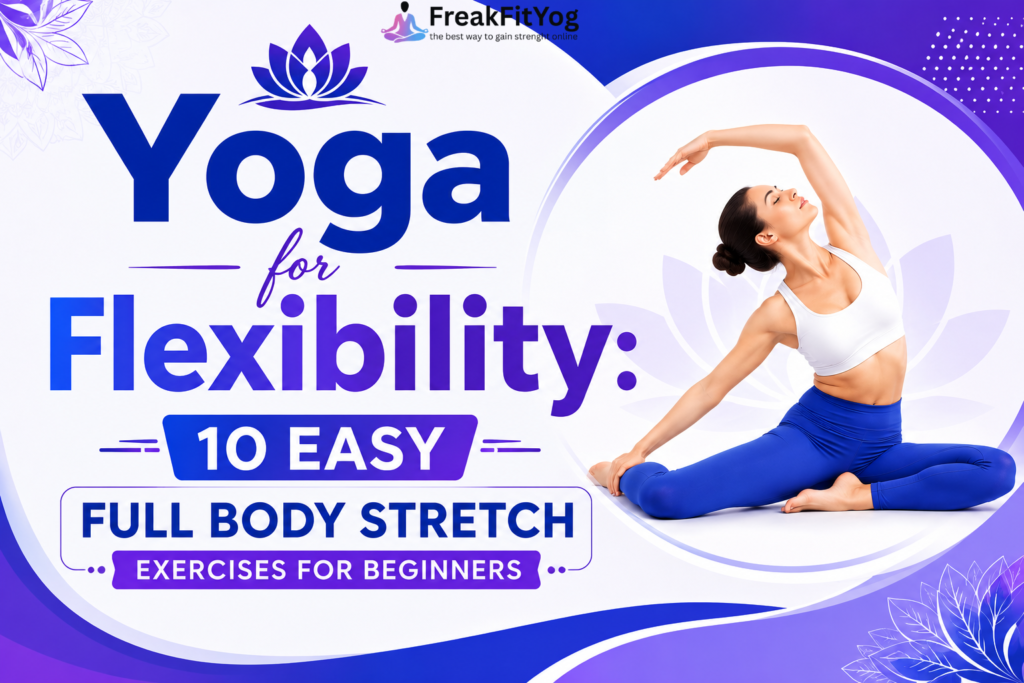
Yoga for Flexibility: 10 Easy Full Body Stretch Exercises for Beginners
This is your complete guide to yoga for flexibility. Learn simple, beginner-friendly stretches you can do at home, with no equipment, to loosen tight muscles and move without pain.
Try our Trial Plan — ₹299
Start your yoga for flexibility journey this week with a guided trial class from FreakFitYog.
Why Flexibility Matters
Whether you've never rolled out a yoga mat or tried a few poses and gave up, this guide is for you. Yoga for flexibility has made it easier than ever to stretch, strengthen, and restore your body right from home, with zero equipment required.
Flexibility isn't just for gymnasts or dancers. It is the foundation of pain-free, everyday movement. Tight hips can cause lower back pain. Stiff shoulders can trigger tension headaches. Rigid hamstrings make even simple things like tying your shoes harder. The good news is that your body responds quickly when you give it the right, gentle invitation to open up.
Practising yoga for flexibility regularly also improves blood flow to your muscles, helps joints move through their full range of motion, and reduces the risk of injury during daily activities or sport. Many students who start with very little flexibility see visible change within a few weeks, simply by staying consistent.
At FreakFitYog, we believe every body is a yoga body. Below are 10 carefully chosen poses that stretch every major muscle group, and they are perfect for anyone just starting out with yoga for flexibility.
This guide covers everything a complete beginner needs: how each pose works, which muscles it targets, how long to hold it, and simple modifications if a pose feels too intense at first. You do not need any prior experience — just a quiet corner and a few minutes a day. For more free guides, class schedules, and beginner programmes, visit our website anytime.
10 Easy Full Body Stretch Poses
Hold each pose for 5 to 10 slow breaths. Move gently and never force a stretch — a little discomfort is normal, sharp pain is not.
1. Cat-Cow Stretch (Marjaryasana-Bitilasana)
Start on hands and knees. Inhale as you drop your belly and lift your gaze (Cow). Exhale as you round your spine toward the ceiling (Cat). This gentle flow warms up the entire spine and is a great way to open any yoga for flexibility session.
2. Child's Pose (Balasana)
Kneel and sink your hips back toward your heels, stretching your arms long in front of you. This restful pose opens the hips, thighs, and ankles while releasing tension in the lower back. Come back here anytime you need a break.
3. Downward Facing Dog (Adho Mukha Svanasana)
From hands and knees, tuck your toes and lift your hips high into an inverted V shape. This full-body stretch works the hamstrings, calves, shoulders, and spine all at once. As a beginner, bend your knees generously — a long spine matters more than straight legs.
4. Low Lunge (Anjaneyasana)
Step one foot forward between your hands, lower the back knee to the floor, and sink your hips gently forward. You will feel a deep stretch through the hip flexors and thighs — the muscles that get tightest from long hours of sitting.
5. Seated Forward Fold (Paschimottanasana)
Sit tall with your legs extended in front of you. Hinge forward from the hips, keeping your spine as long as possible. This pose deeply stretches the entire back of the body, including the hamstrings, calves, and spine. Use a strap or a towel around your feet if you can't reach them yet.
6. Butterfly Pose (Baddha Konasana)
Sit with the soles of your feet together and let your knees fall gently outward. Press your thighs gently toward the floor without forcing them. This is one of the best inner-thigh and groin openers in yoga for flexibility practice.
7. Supine Twist (Supta Matsyendrasana)
Lie on your back, hug one knee to your chest, then let it fall gently across your body while you look in the opposite direction. This calming twist releases tension from the spine and the outer hip. Repeat on both sides.
8. Standing Forward Fold (Uttanasana)
Stand with feet hip-width apart and fold forward over your legs. Let your head hang heavy and hold opposite elbows, swaying gently side to side. This pose decompresses the spine and calms the nervous system almost instantly.
9. Thread the Needle
From hands and knees, slide one arm along the floor under the opposite arm, lowering your shoulder and cheek toward the mat. This is a wonderful shoulder and upper-back opener that counters hours of screen time and hunching.
10. Corpse Pose (Savasana)
Lie flat on your back, arms slightly away from your body, palms facing up. Do absolutely nothing. Savasana is the most important pose in the sequence — it allows your nervous system to absorb every benefit of your practice. Stay here for at least 5 minutes and fully let go.
Benefits of Yoga for Flexibility
Practising yoga for flexibility regularly does far more than help you touch your toes. Here's what consistent practice can do for you:
- Reduces chronic muscle pain and tension in the back, neck, and shoulders
- Improves posture and makes everyday movement feel easier
- Relieves stress and helps you sleep more deeply
- Builds strength alongside flexibility, so muscles support your joints properly
- Can be practised anywhere — no gym membership or equipment needed
- Boosts circulation and supports long-term joint health
- Helps prevent injury during sport, exercise, or daily activity
- Improves focus and mental clarity through mindful breathing
- Supports better digestion through gentle twists and forward folds
- Lowers stress hormone levels with slow, controlled breathing
- Increases body awareness, helping you catch tension before it builds up
These benefits compound over time. A person who practises yoga for flexibility two or three times a week for a few months often reports better sleep, fewer aches after long work days, and more ease in everyday movements like bending, reaching, and climbing stairs. Browse more wellness tips on our website.
5 Golden Rules for Beginner Yogis
- Breathe through the stretch. Your exhale is what deepens a pose. Never hold your breath — slow, controlled breathing is the secret to progress in yoga for flexibility.
- Consistency beats intensity. 15 minutes every day beats 90 minutes once a week. Your body adapts to what you repeat, so show up daily, even if it's just three poses.
- Honour your edge. Work at the boundary of sensation, not pain. A gentle, productive discomfort is fine — sharp or stabbing pain means stop and modify the pose.
- Warm up before deep stretching. Begin with Cat-Cow and gentle movement before deeper poses like Seated Forward Fold or Butterfly Pose.
- Track your progress. Photograph your Forward Fold today, then again in 30 days. Progress in flexibility is real, and seeing it keeps you motivated.
Common Mistakes Beginners Make
Even with the right poses, a few habits can slow down your progress with yoga for flexibility. Watch out for these:
- Bouncing in a stretch. Bouncing can strain muscles and tendons. Ease into every pose slowly and hold it steady instead.
- Comparing yourself to others. Every body is different. Focus on your own range of motion, not how far someone else can fold.
- Skipping the warm-up. Cold muscles are more likely to get injured. Always start with a few rounds of Cat-Cow before deeper stretches.
- Holding your breath. Tension in the breath creates tension in the body. Keep your breathing slow and steady throughout.
- Practising inconsistently. A few minutes daily builds flexibility far faster than occasional long sessions.
Avoiding these mistakes makes your yoga for flexibility practice safer and helps you see results sooner. If you are unsure whether you are doing a pose correctly, our instructors on our website can guide you through it live.
A Simple Weekly Routine for Beginners
Not sure how to fit yoga for flexibility into your week? Here is an easy structure you can follow without feeling overwhelmed:
- Monday, Wednesday, Friday: Full 10-pose sequence from this guide, 20 to 25 minutes, focusing on hips and hamstrings.
- Tuesday, Thursday: A shorter 10-minute session — Cat-Cow, Child's Pose, Thread the Needle, and Savasana — to release upper body tension after desk work.
- Saturday: A slower, longer session (30 to 40 minutes) holding each pose a little longer to build deeper flexibility.
- Sunday: Rest, or a gentle 5-minute Savasana and breathing practice to let your muscles recover.
This rhythm balances effort and recovery, which is exactly how flexibility is built — through repeated, gentle stretching rather than occasional intense sessions. Adjust the days to fit your schedule; what matters most in yoga for flexibility is showing up regularly, not following a perfect plan.
Before and After Your Practice
A few simple habits around your practice make a real difference to how your body responds to yoga for flexibility training:
- Hydrate well. Muscles and connective tissue stretch more easily when your body is properly hydrated. Drink water throughout the day, not just before class.
- Avoid heavy meals beforehand. Practise on a light stomach — ideally 1.5 to 2 hours after eating — so twists and folds feel comfortable.
- Wear comfortable, flexible clothing. Loose or stretchy clothes let you move freely through each pose without restriction.
- Use a mat with good grip. This prevents slipping in poses like Downward Dog and Low Lunge, especially as you build confidence.
- Cool down properly. Never skip Savasana at the end — it signals to your nervous system that the stretch is complete and helps your muscles relax fully.
- Rest when needed. Mild muscle soreness the next day is normal for beginners, but sharp pain or swelling means you should rest and, if needed, consult a doctor.
Small habits like these compound just as much as the poses themselves. Combined with the weekly routine above, they give your yoga for flexibility practice the best chance to succeed long term.
Begin Your Flexibility Journey Today
Join beginners who have transformed their bodies through yoga for flexibility with FreakFitYog — personalised guidance, expert support, and a welcoming community await you. Start with our ₹299 Trial Plan.