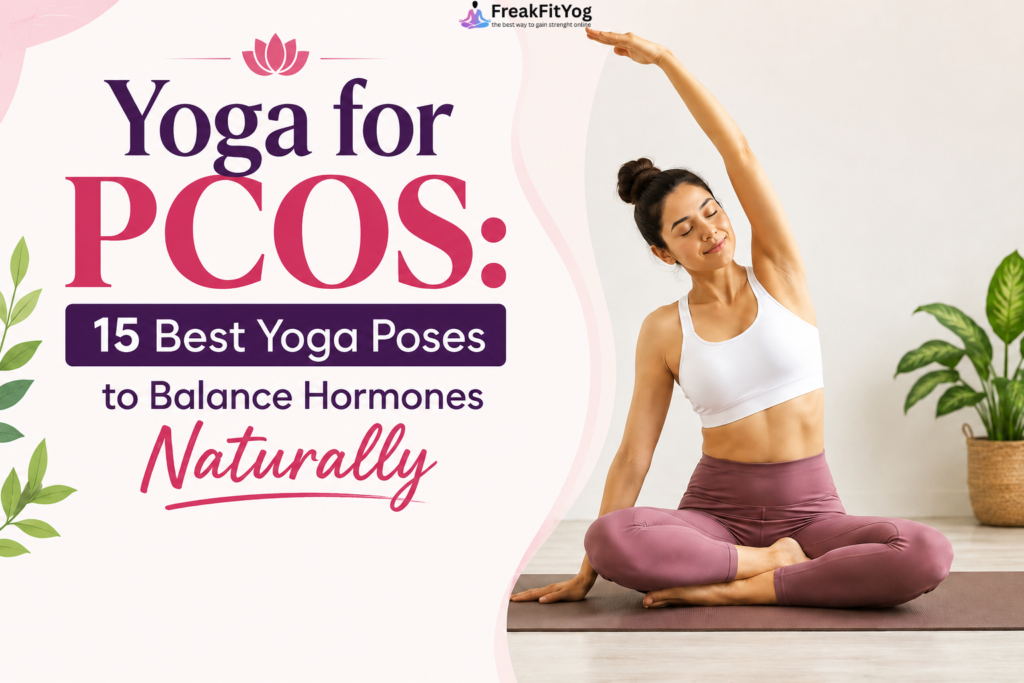
Yoga for PCOS: 15 poses to balance your hormones, naturally
A gentle, science-informed Yoga for PCOS practice can calm your nervous system, support insulin sensitivity, and bring your cycle back into rhythm — five days a week, from home.
Why is Yoga for PCOS so effective?
PCOS is closely tied to chronic stress and hormonal imbalance. Rising cortisol can quietly worsen symptoms — which is exactly where a consistent Yoga for PCOS routine helps most.
Calms the nervous system
Slow, mindful movement lowers cortisol and eases the stress response that aggravates PCOS symptoms.
Supports insulin sensitivity
Regular practice improves circulation and metabolism, helping the body respond better to insulin.
Improves cycle regularity
Research suggests consistent yoga may support more regular menstrual cycles and reduced anxiety.
15 best yoga poses for PCOS
Every pose in this Yoga for PCOS sequence targets circulation to the pelvic region, the endocrine glands, or the nervous system — the three levers that matter most for hormonal balance.
Butterfly Pose
(Baddha Konasana)
Opens the hips, improves pelvic circulation, and eases stress.
Cobra Pose
(Bhujangasana)
Strengthens the back and stimulates the abdominal organs.
Child's Pose
(Balasana)
A deeply relaxing rest that calms the mind and lowers cortisol.
Bridge Pose
(Setu Bandhasana)
Activates the thyroid and strengthens the pelvic muscles.
Cat-Cow Stretch
Gently massages the abdominal organs while easing spinal tension.
Bow Pose
(Dhanurasana)
Stimulates the ovaries, aids digestion, and lifts energy.
Legs-Up-the-Wall
(Viparita Karani)
One of the most restorative poses for circulation and tired legs.
Garland Pose
(Malasana)
A deep squat that strengthens the pelvic floor and aids digestion.
Seated Forward Bend
Stretches the spine and quiets anxiety linked to PCOS.
Camel Pose
(Ustrasana)
Opens the chest and stimulates the endocrine glands.
Supine Spinal Twist
Supports detoxification, spinal mobility, and deep relaxation.
Garland Twist
Improves digestive health and hip flexibility.
Mountain Pose
(Tadasana)
A foundational pose for posture, balance, and body awareness.
Corpse Pose
(Savasana)
Never skip it — this is where your body absorbs the practice.
Alternate Nostril Breathing
A pranayama technique that balances the nervous system and oxygen flow.
Benefits of a regular Yoga for PCOS practice
Consistency compounds. Here's what women notice over weeks, not days.
- Improves hormonal balance naturally
- Supports healthy weight management
- Reduces stress and anxiety
- Increases insulin sensitivity
- Improves menstrual cycle regularity
- Enhances fertility and reproductive wellness
- Improves digestion and metabolism
- Boosts flexibility and strength
- Promotes better sleep
- Increases overall energy and confidence
A simple daily routine
25–40 minutes, five days a week, is enough. Here's how to structure it.
- 5 minutes of deep, conscious breathing
- 20–25 minutes moving through your Yoga for PCOS poses
- 5 minutes of closing stretches
- 5–10 minutes of Savasana or meditation
Why practice with FreakFitYog?
FreakFitYog specializes in helping women build sustainable routines through expert-led, online yoga classes — including structured Yoga for PCOS sessions for every level, from the comfort of home.
Frequently asked questions
Everything women ask us before starting a Yoga for PCOS practice.
No. PCOS is a long-term condition, but a regular Yoga for PCOS practice, combined with healthy nutrition, exercise, and medical guidance, can significantly help manage symptoms.
Butterfly Pose, Cobra Pose, Bridge Pose, Child's Pose, and Legs-Up-the-Wall Pose are among the most recommended poses for supporting women with PCOS.
Aim for at least 30 minutes of yoga, five days a week, for the best long-term benefits.
No — yoga is a powerful complementary practice, not a replacement. Pair your Yoga for PCOS routine with guidance from your doctor.
Visit freakfityog.com to explore our expert-led classes, or message us directly on WhatsApp to get personalized guidance.